

Understanding Custom Orthotics
About Custom Orthotics
The knee joint is one of the most complex and heavily used joints in the body. It supports your weight, absorbs shock, and allows you to walk, run, squat, and climb. Because of its constant use, the knee is also one of the most commonly injured joints. Knee pain can affect anyone - from athletes and runners to those with physically demanding jobs or even sedentary lifestyles. It can arise suddenly after an injury or build gradually from overuse, muscle imbalance, or underlying joint conditions.
At Rehab8, our knee pain physiotherapy programs aim to restore proper movement, alleviate discomfort, and prevent recurring injury through evidence-based care.
What are custom orthotics?
Custom orthotics are specially designed shoe inserts that support and align the feet according to your unique structure and walking pattern. Unlike over-the-counter insoles, custom orthotics are made based on a precise assessment and cast of your feet.
They can help redistribute pressure, correct alignment issues, and absorb shock while walking or running. Orthotics can be used for daily wear, work, sports, or recovery from injury — promoting comfort, stability, and long-term joint health.
Common reasons why people need orthotics
Foot and gait abnormalities can affect the entire body’s movement chain. Custom orthotics can help with:
Flat Feet (Fallen Arches)
When arches collapse, the feet roll inward (overpronate), placing strain on the knees, hips, and back. Orthotics support the arches to improve alignment.
Plantar Fasciitis
Heel and arch pain from inflammation of the plantar fascia can improve with orthotics that cushion and support the arch.
Heel Spurs
These bony growths can cause pain under the heel. Orthotics help offload pressure and provide shock absorption.
High Arches (Pes Cavus)
High arches can cause uneven pressure on the foot. Orthotics help redistribute weight and improve balance.
Metatarsalgia
Pain in the ball of the foot can be relieved by orthotics designed to reduce pressure on the forefoot.
Bunions and Hammertoes
Orthotics can reduce strain on the forefoot and improve alignment to help manage discomfort from these conditions.
Knee, Hip, or Back Pain
Poor foot mechanics can contribute to pain higher up the kinetic chain. Correcting foot alignment through orthotics can improve overall posture and movement.
Sports and Overuse Injuries
Athletes or active individuals often benefit from orthotics that improve performance and reduce repetitive strain.
How chiropody helps assess and treat foot mechanics
Chiropody focuses on the assessment, prevention, and treatment of foot and lower limb conditions. At Rehab8, our chiropodists take a comprehensive approach to understanding your movement and foot function.
Comprehensive Assessment
We begin with a detailed evaluation of your feet, gait, and posture. This may include observing how you walk, analyzing pressure points, and assessing footwear.
Digital Scanning
A high-quality digital scan of your feet is taken to ensure the orthotics match your exact shape and structure.
Custom Fabrication
Your orthotics are made using specialized materials suited to your lifestyle and needs; whether for sports, work, or everyday comfort.
Education and Footwear Advice
We provide guidance on proper footwear, posture, and how to integrate orthotics into your daily activities for the best results.
Follow-Up and Adjustments
As your body adapts, we reassess comfort and alignment, making modifications to ensure continued support and relief.
Takeaway
Proper foot alignment is essential for overall movement health. Custom orthotics can relieve pain, correct biomechanical imbalances, and support every step you take. At Rehab8, our chiropody team combines expert assessment, technology, and education to help you move comfortably and confidently.
Our
framework
Chiropody specializes in the assessment and treatment of foot and lower limb conditions to improve comfort, mobility, and overall foot health. From nail care and callus management to addressing foot pain, diabetic care, and custom orthotics, our foot care specialist provides comprehensive care tailored to your needs. By focusing on prevention, treatment, and education, chiropody helps keep you on your feet comfortably and confidently.
Biomechanical Analysis
- Focuses on the mechanics of the foot, ankle, and lower limb.
- Key concepts:
- Gait analysis: Examining heel strike, midstance, and toe-off.
- Foot posture assessment: Supination, pronation, arch height.
- Joint kinematics: Tibiofemoral and subtalar joint movement.
- Orthotic intervention: Corrective insoles to redistribute forces - typically recommended by a foot care specialist.
Tissue Evaluation
- Addresses the underlying tissue disorders causing pain or dysfunction.
- Includes:
- Soft tissue injuries: Plantar fasciitis, Achilles tendinopathy.
- Skin and nail disorders: Fungal infections, ingrown nails.
- Neurological conditions: Peripheral neuropathy, diabetic foot care.
- Vascular disorders: Peripheral arterial disease.
For personalized assessment and treatment, consulting the best chiropodist near North York can help ensure optimal care.
Activity-based Recovery
- Focuses on how foot and ankle conditions affect daily activities.
- Includes:
- Functional mobility assessment: Balance, walking, running.
- Activity modification: Footwear, activity load management.
- Return-to-activity planning: Especially in athletes, guided by a foot care specialist to restore function safely.
Why
choose us?
Your first session is a chance for us to get to know your body, understand its strengths and weaknesses, and identify any areas that need attention.
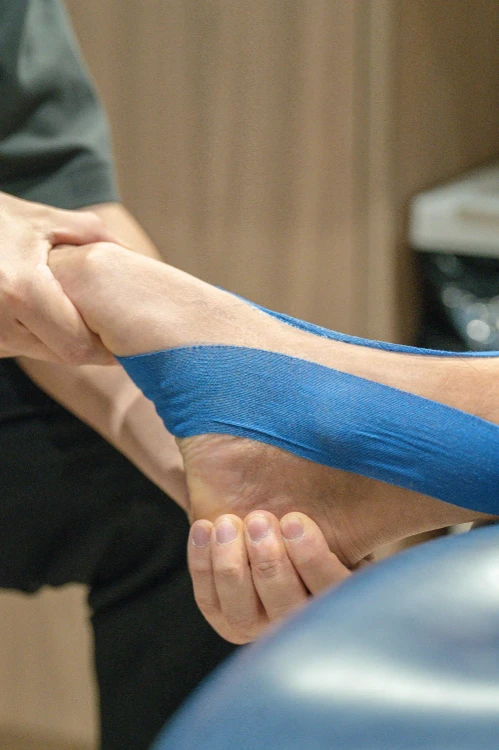
We design your session around your needs, goals, and lifestyle, combining manual therapy, modalities, and corrective exercises for optimal results.
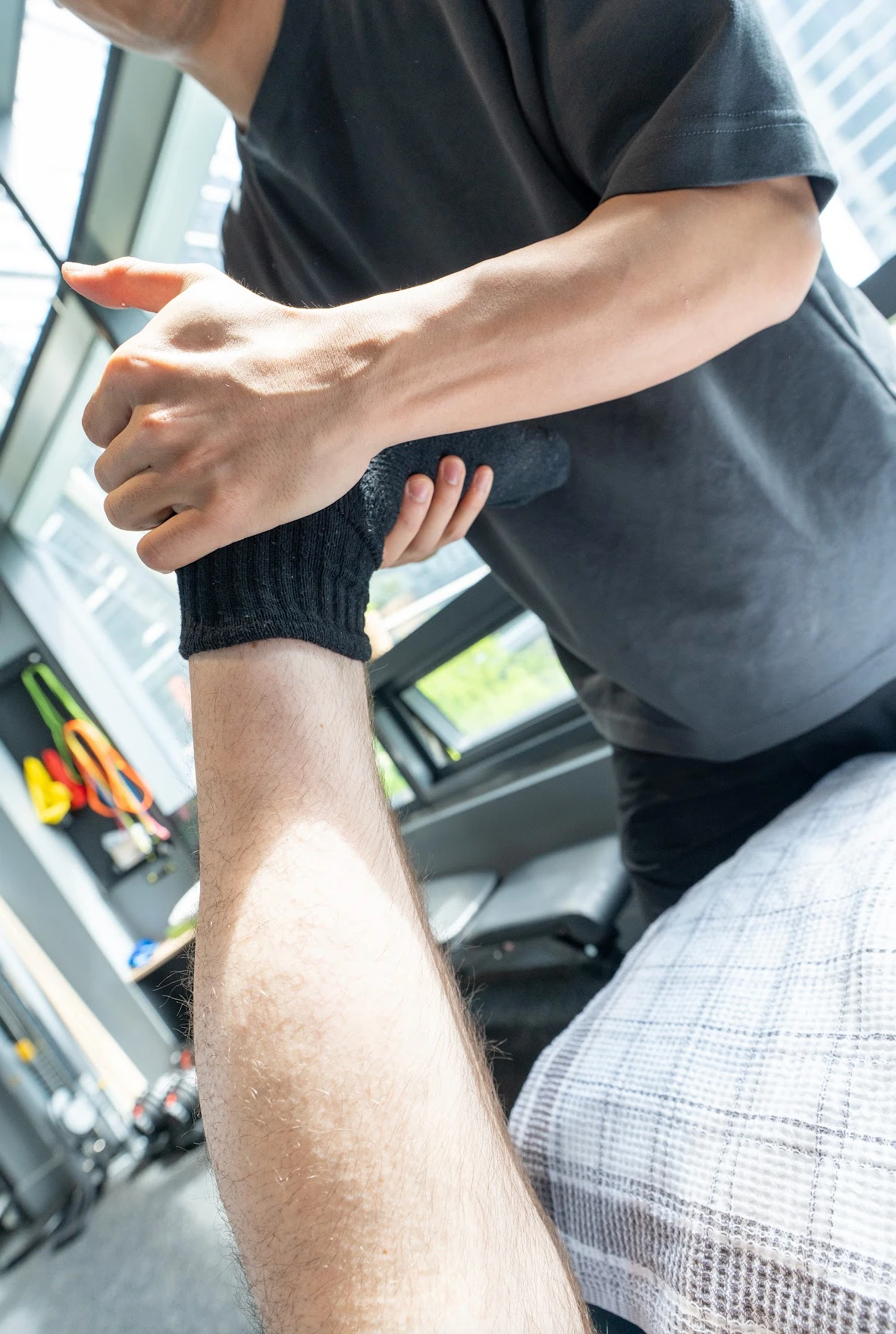
We take a whole-body approach to your wellbeing, helping you feel better, move more freely, and enjoy a healthier, more active, and balanced life.
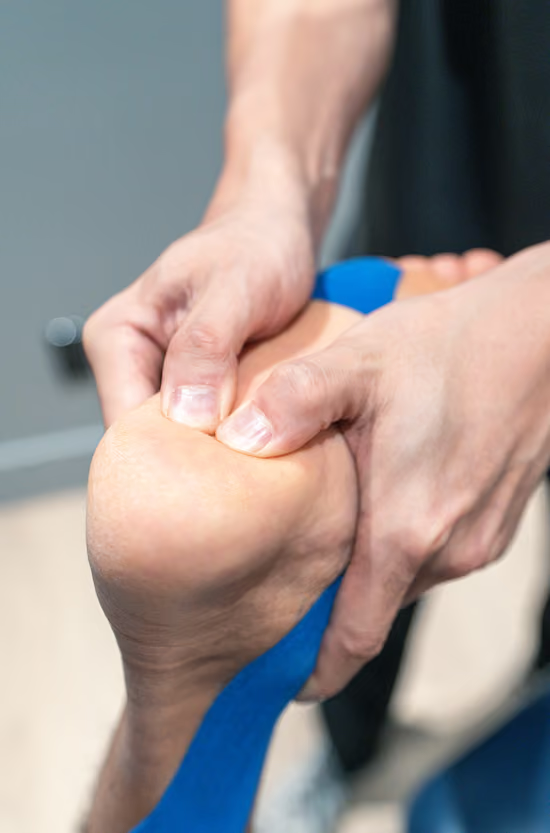
Got a question for us?
Check below to see if we have an answer for you. If you can’t find the information you’re looking for, please contact us and we’ll be happy to help.
Recovery time depends on the cause and severity of your pain. Minor strains can resolve in a few weeks, while more complex injuries like ligament or meniscus tears may take several months. A physiotherapist can tailor your recovery plan to your specific needs and activity level.
Not necessarily. Rest is important initially, but gentle movement and guided exercises often promote faster healing. Your physiotherapist will help you modify or adapt your activities to stay active safely.
You should consult a physiotherapist if knee pain persists for more than a few days, limits your mobility, causes swelling, or interferes with daily activities. Early assessment helps prevent minor issues from becoming long-term problems.
Get started
today.
We're excited to meet you and help you recover!