

10 Best Ankle Strengthening Exercises for Stability and Injury Prevention

Why It’s Important to Strengthen Ankles for Stability
The ankle is a highly mobile joint that also needs to stay stable under load. Every time you walk, run, jump, or change direction, your ankles absorb force and help control movement. If the supporting muscles and ligaments are weak, the joint becomes more vulnerable to strain.
People with weak ankles often notice wobbling during single-leg balance, frequent rolling, stiffness after activity, or discomfort on uneven surfaces. This is why exercises for weak ankles are valuable for both active individuals and those who spend long hours standing.
Better Balance and Coordination
Stronger ankles improve your body's ability to react to movement changes. This helps reduce slips, trips, and awkward landings.
Lower Risk of Sprains
Ankle sprains are one of the most common injuries in sport and daily life. Strengthening the surrounding muscles improves joint control and resilience.
Improved Performance
Stable ankles create a stronger foundation for running, lifting, hiking, and sport-specific movement.
10 Best Ankle Strengthening Exercises to Strengthen Ankles
These movements are beginner-friendly and can be progressed over time. If pain occurs, modify the range or seek professional guidance.
1. Ankle Circles
Sit or stand and slowly rotate your ankle clockwise and counterclockwise. Perform controlled circles in each direction.
- Why It Helps: Ankle circles improve mobility, joint awareness, and circulation before progressing to harder ankle strengthening exercises.
2. Heel Raises
Stand tall and rise onto your toes, then lower slowly. Use a wall or chair for support if needed.
- Why It Helps: Heel raises strengthen the calves and improve ankle control during walking, stair climbing, and jumping.
3. Toe Raises
Lift your toes while keeping your heels planted. Lower slowly and repeat.
- Why It Helps: This movement strengthens the front of the lower leg, which supports ankle stability and helps control foot placement.
Single-Leg Balance
Stand on one foot for 20–30 seconds. Progress by closing your eyes or standing on a cushion.
- Why It Helps: Balance drills train the nervous system and are excellent exercises for weak ankles after previous sprains.
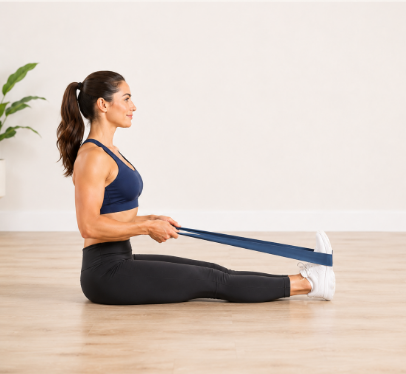
Resistance Band Eversion
Loop a resistance band around the forefoot and push the foot outward against tension.
- Why It Helps: This targets the outer ankle stabilizers, which are commonly weak in people with recurrent ankle rolling.
Resistance Band Inversion
With the band secured, pull the foot inward against resistance.
- Why It Helps: This strengthens the inner ankle muscles and supports joint control in multiple directions.
Towel Scrunches
Place a towel on the floor and use your toes to pull it inward.
- Why It Helps: Towel scrunches strengthen the small muscles of the foot that support the arch and ankle mechanics.
Step-Downs
Stand on a step and slowly lower one foot toward the floor, then return.
- Why It Helps: Step-downs build strength through the ankle while also improving knee and hip control.
Lateral Hops
Hop gently side to side over a line, landing softly with control.
- HWhy It Helps: This exercise builds dynamic ankle stability and prepares the body for sport or fast movement.
Walking on Toes and Heels
Walk forward on your toes for 20 steps, then on your heels for 20 steps.
- Why It Helps: This simple drill challenges multiple lower-leg muscles and improves coordination.
How to Strengthen Ankles Safely and Effectively
Start With Control Before Intensity
One of the biggest mistakes people make when trying to strengthen ankles is progressing too quickly into advanced exercises. Jumping drills, unstable surfaces, or high-resistance movements may look effective, but they are often too demanding if the ankle lacks basic control. It is better to start with balance work, bodyweight heel raises, and slow controlled movements. These simpler drills teach the ankle how to stabilize properly before introducing greater force. Building this foundation first leads to faster and safer long-term progress.
Train Consistently Throughout the Week
Consistency matters more than intensity when it comes to ankle strengthening exercises. Short sessions completed three to four times per week are usually more effective than one long workout done occasionally. The ankle responds well to regular movement because it is used daily during walking and standing. Frequent practice helps improve coordination, muscle endurance, and joint awareness. Even ten minutes at a time can create noticeable improvements when done regularly.
Progress Gradually as Stability Improves
Once exercises begin to feel easier, progression becomes important. This might mean adding repetitions, increasing time under tension, using resistance bands, or moving from double-leg to single-leg exercises. However, progression should be gradual. If pain, swelling, or instability returns, the body may be signaling that the increase was too aggressive. The goal is to challenge the ankle enough to stimulate growth while allowing it to recover between sessions.
Prioritize Recovery and Tissue Health
Strength gains happen during recovery, not just during exercise. Mobility work, adequate sleep, hydration, and circulation all help tissues adapt to training - our physiotherapy services can help you navigate and develop a structured plan that fits into your lifestyle. Many people also benefit from hands-on recovery support such as massage therapy services to reduce stiffness and improve movement quality. If you are curious about recovery strategies, Rehab8 also shares information on how massage improves circulation and overall lower-body wellness.

Common Causes of Weak Ankles
Previous Sprains That Were Never Fully Rehabilitated
One of the most common reasons people continue to have unstable ankles is an old sprain that seemed to heal but never fully recovered. Pain and swelling may disappear, yet balance deficits, weakness, and poor coordination can remain. Without proper rehab, the ankle may be more likely to roll again, creating a cycle of repeated injury.
Sedentary Lifestyle and Reduced Movement Variety
Modern lifestyles often involve long hours of sitting, limited walking, and minimal balance challenges. When the ankle is not regularly exposed to movement demands, the supporting muscles can weaken over time. Joint mobility may also decrease, making the ankle feel stiff and less responsive when activity levels suddenly increase.
Poor Footwear Choices
Shoes that lack support, cushioning, or proper fit can gradually contribute to weak ankles. Constant use of unsupportive footwear may reduce stability and place greater stress on the surrounding tissues. In some cases, overly rigid footwear can also limit natural ankle movement, reducing strength development.
Weakness Higher Up the Kinetic Chain
The ankle does not function in isolation. Weak hips, poor core control, or limited knee stability can all change how force travels through the lower body. When larger muscle groups are not doing their job, the ankle often compensates. This can create fatigue, instability, and recurring discomfort.
When to Seek Professional Help
If instability, swelling, or repeated ankle rolling continues despite exercise, a professional assessment is recommended. Persistent weakness may involve ligament laxity, mobility restrictions, tendon irritation, or compensation patterns elsewhere in the body. A physiotherapist can assess gait, strength, balance, and movement mechanics to create a personalized recovery plan.
Conclusion
Learning how to strengthen ankles is one of the most practical ways to improve stability, prevent injury, and move with confidence. With regular exercises to strengthen ankles, better balance and stronger movement patterns can develop over time. Whether you are recovering from an old sprain or simply trying to stay active, stronger ankles benefit your entire body. If ankle weakness or recurring instability is holding you back, Rehab8 offers expert treatment and rehabilitation programs to help you regain strength, confidence, and long-term stability.
FAQ
How long does it take to strengthen ankles?
Many people notice better balance and control within two to four weeks of regular training, though long-term strength gains take longer.
What are the best exercises for weak ankles?
Single-leg balance, heel raises, resistance band drills, and step-downs are among the most effective.
Can ankle exercises prevent sprains?
Yes. Stronger muscles and better balance reduce the risk of awkward landings and rolling the ankle.
Should I exercise after an ankle sprain?
Often yes, but the timing and progression depend on severity. Professional guidance is ideal.
